08-644 68 70 · info@matarkontroll.se Mon–Fri 8.00–17.30Cookie-free site
Inspection & calibration

Weighing — solutions, calibration and service

From silos and platform scales to belt scales and dosing — industrial weighing is found in every process where quantity means money, quality or safety. We supply, calibrate, verify and service weighing solutions, regardless of make.

Accredited weighing
Two ways to weigh

Static or in motion

You either weigh a quantity at rest (statically), or you weigh the material while it is moving (continuously). The principle is the same — load cells convert force into an electrical signal that the weighing electronics translate into weight.

Static weighing

Vessel, silo and tank weighing, platform scales and truck scales. Load cells beneath the object weigh the contents directly — for inventory, filling, batching and billing.

Continuous weighing

Belt scales, weighfeeders and mass flow meters weigh the material in motion and totalise the quantity — for process control, dosing and transfer. Read about belt scales.

Static weighing

Vessel, silo and tank weighing

Load cells are placed beneath the silo, tank or vessel and weigh the contents directly — without mechanical weigh beams. Perfect for level and inventory control, filling and batch-wise dosing.

Inventory & levelExact contents in real time — more reliable than a level sensor
FillingStop at target weight, overfill protection
BatchingRecipes and batch-wise dosing with high repeatability

Rugged load cells

Stainless, hermetically sealed load cells (IP68) withstand moisture, dust and strain. Digital connection enables individual monitoring of each cell — imbalance and faults are detected immediately.

Dosing

Weighfeeder — dosing and batching

A weighfeeder is a belt scale with regulated speed. The weight is measured continuously and a PID controller governs the belt speed so that exactly the right quantity is dosed into the process — for mixing, feeding and batch-wise discharge.
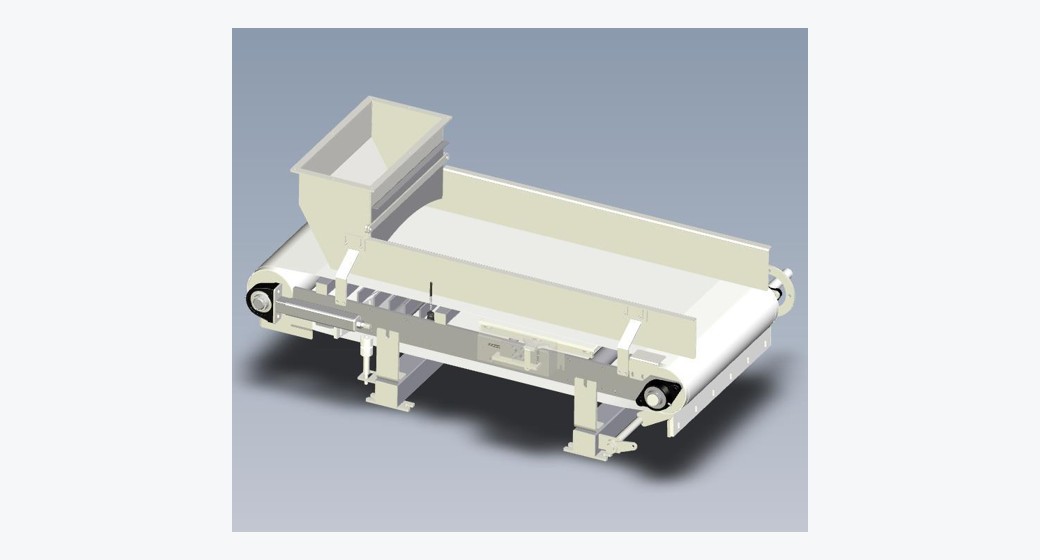
Weighfeeder — belt scale with regulated belt speed for dosing
Weighfeeder: a compact belt scale where the load cell weighs the material and a PID controller regulates belt speed for precise dosing.
Weighing

Low flows, high precision

Compact units weigh and totalise even small flows, with accuracy down to ±0,5 %.

Dosing

Continuous feeding

The mass flow is regulated via the belt speed — even feeding to mixing and reaction processes.

Batching

Start/stop against target weight

Discharge and filling against a preset batch — with food-grade designs for sensitive products.
Process protection

Non-contact monitoring

Weighing is not only about weight — often you need to know that the material is actually moving and that the equipment is running. Non-contact sensors raise the alarm before small problems become costly breakdowns.

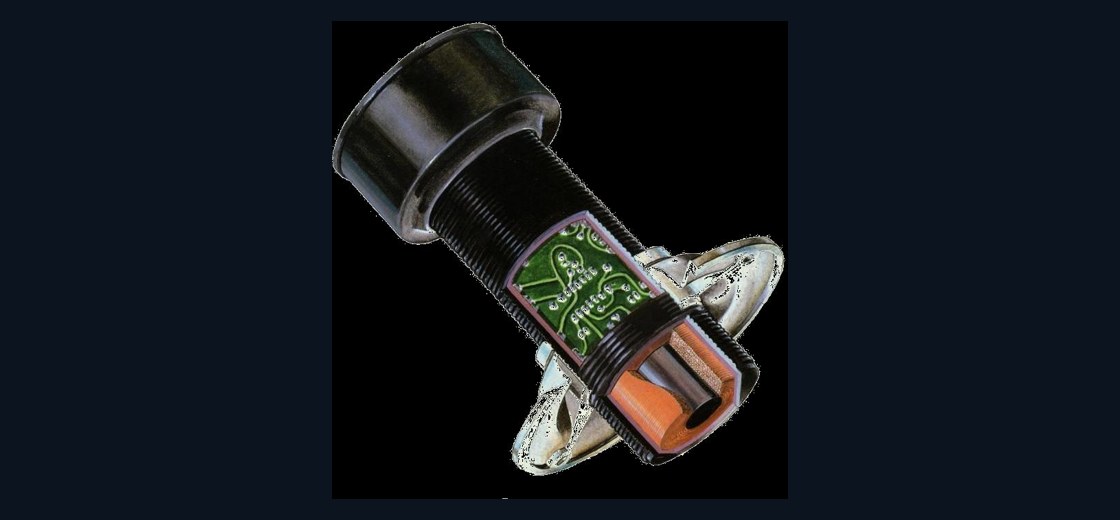
Non-contact motion probe for process protection
Non-contact motion probe — detects rotation on belts, screws and elevators and alarms on zero, over- or under-speed.

Motion probes

Magnetic-inductive sensors (Faraday's law) detect rotation on conveyors, screws and bucket elevators — raising the alarm at zero, over or under speed before machines are damaged or stand still.

Acoustic sensors

Measure the sound energy from material against the pipe wall — non-contact detection of flow/no flow, blockage in pipes, burst filter bags and silo discharge. Mounted externally without process interruption.

Why calibration

A scale is only as good as the reference

Just as for belt scales: a scale only reads correctly as long as it is calibrated and verified against a traceable reference. Temperature, loading, mechanical wear and modifications affect the reading over time.

Traceable calibration
We calibrate with traceable reference weights and reference measurement. Traceability — an unbroken chain up to national standards with a stated measurement uncertainty — is what distinguishes an accredited calibration certificate from an internal protocol.
Regular verification
Check the scale at regular intervals against a reference, and readjust if needed. After mechanical interventions — new belt, new load cells, rebuild — the scale must always be recalibrated.
Diagnostics that prevent
Modern weighing electronics monitor each load cell for cable break and impedance, record limit exceedances with a timestamp and can be integrated into SIMATIC for remote access — problems are detected before they affect the measured value.
Weighing electronics

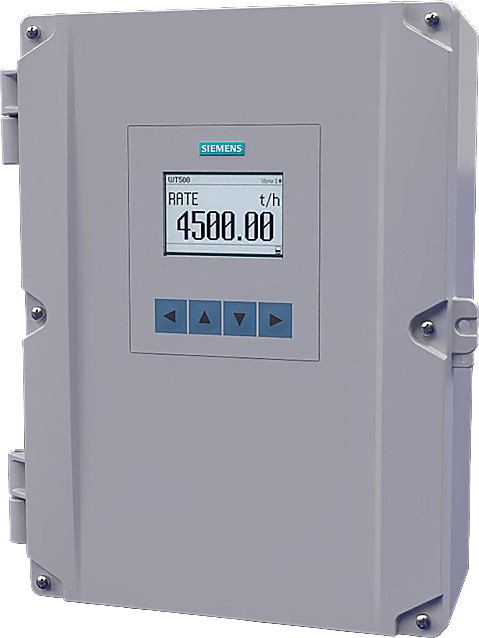
SIWAREX WT500 — the terminal that drives the scale

Siemens' stand-alone weighing terminal for belt scales, weighfeeders and solids flowmeters — accurate, reliable and easy to commission.

SIWAREX WT500 weighing terminal from Siemens
  • Accuracy 0.1% of full scale — handles 1, 2, 4 or 6 load cells
  • Moisture and incline compensation keeps the reading stable
  • All common fieldbuses plus a built-in web server and 8 GB micro-SD for logging
  • IP65/Type 4X, EcoTech profile and removable terminals — rugged and energy-efficient
More about SIWAREX WT500