08-644 68 70 · info@matarkontroll.se Mon–Fri 8.00–17.30Cookie-free site
Services

IMD — individual metering and billing

With better control over consumption, you can reduce your carbon footprint and contribute to a more sustainable use of energy resources — and every resident pays for exactly what they use.

Service & knowledge
Media types

What can be metered individually

Water

Cold water

Gain insight into how different activities affect water consumption in real time and find ways to save water in everyday life — particularly important in areas facing water scarcity.

Water

Hot water and circulation (VVC)

Awareness of water usage leads to more sustainable habits — for example, shorter showers or getting dripping taps repaired.

Heating

Heating

The data collected helps you identify trends and patterns in heating usage — valuable insight for energy efficiency and investments. With real-time data, the indoor temperature can be optimised for a more even and comfortable indoor environment.

Electricity

Electricity

By monitoring electricity consumption in real time, inefficient usage patterns can be identified and corrected — which can deliver significant energy savings and lower costs.

How it works

From meter to invoice

Four steps — from installation to individual billing.

1. Meter installationSeparate meters are installed for each apartment or unit to accurately measure the consumption of electricity, water, heating or other resources
2. Data collectionThe meters continuously collect consumption data and send the information to a central system for analysis and management
3. Analysis and calculationThe collected data is analysed to determine the exact consumption for each unit
4. BillingEach unit is billed individually — every resident or tenant pays for exactly the amount of energy or water they have used

Allocation billing from OneViewer

OneViewer measures and allocates the costs of shared resources based on each unit's actual consumption. When a property has a shared meter for several dwellings, the cost is distributed using an allocation algorithm as agreed.

  • The meters continuously send data to OneViewer, which analyses and determines each unit's consumption
  • Costs are allocated fairly — each unit pays for its actual usage, not a flat rate
  • Individual invoices are generated with consumption and cost per resource and time period
  • Distribution via integration with Fortnox — email, digital mailbox or post
  • Follow-up, reports and analyses that help residents understand and optimise their consumption
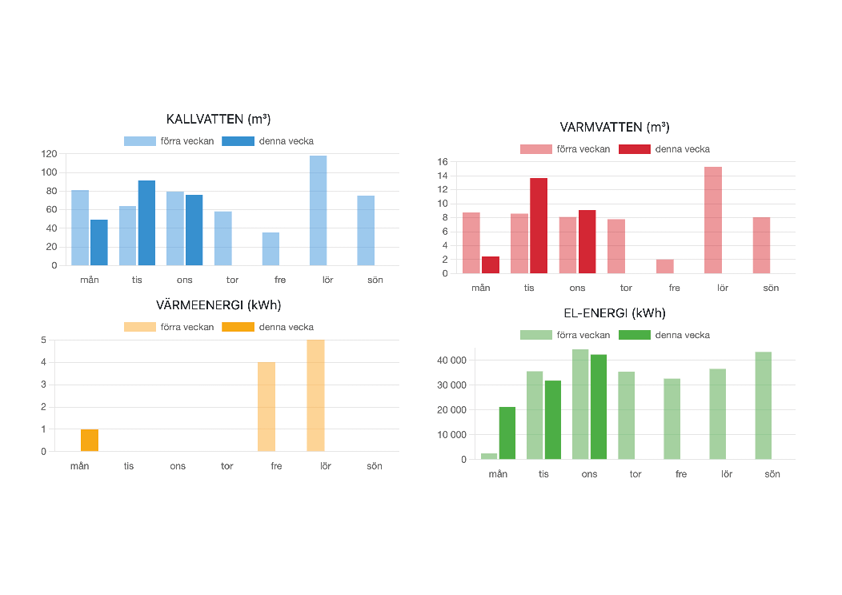
OneViewer allocation billing
Knowledge

Frequently asked questions about IMD

What is IMD metering?
Individual metering and billing (IMD) is a method for measuring and billing energy and water consumption at an individual level in multi-dwelling buildings or commercial properties. Separate meters per unit, central data collection, analysis and individual billing. IMD promotes fairness and awareness around consumption, which leads to reduced usage and cost savings — and helps property owners streamline resource management and improve sustainability.
Are there laws and regulations around IMD?
Yes. The Swedish Energy Markets Inspectorate (Energimarknadsinspektionen) oversees the rules for the energy market. The EU Energy Efficiency Directive (2012/27/EU), implemented into Swedish law, requires individual metering and billing of heating, cooling and domestic hot water in multi-dwelling buildings where it is technically feasible and cost-effective. The Energy Performance of Buildings Act (2006:985), Boverket's building regulations and tenancy law also have an effect — for new construction and major renovations, IMD may be required to meet the energy performance requirements.
What rules apply to the equipment used in IMD?
Metering equipment used for billing must be approved under the Measuring Instruments Directive (MID, 2004/22/EC). Swedac oversees and accredits the bodies that verify conformity. Technical standards such as EN 1434 (heat meters) and EN 14154 (water meters) govern design, testing and maintenance. For remote reading, there are additional rules on data handling and the protection of personal data.
Can I implement IMD with meters that are not MID-approved?
Technically possible but associated with significant risks: accuracy and reliability without MID's stringent testing, legal requirements that often mandate MID-approved equipment for billing, and users' confidence in the billing. We strongly recommend MID-approved meters. If non-approved meters are used regardless, regular calibration and maintenance are essential.
Do all products have to come from the same supplier?
No. What matters is that the products are compatible with one another and with the overall system. Mätarkontroll's OneViewer system is an open system that handles all types of communication and most types of meters. Meters that comply with international standards such as M-Bus and OMS are easy to integrate. Mixing suppliers can deliver better pricing and more innovative solutions — as long as compatibility and support are planned for.
How do I choose the right system?
Start with the need: which media types (water, heating, electricity), which type of property and which billing system. Choose open standards to avoid lock-in, and make sure the collection system can handle multiple makes. We help you all the way — from sizing and meter selection to installation, data collection and allocation billing.